
The Healing Touch: How Acupressure Can Enhance Your Pet’s Health and Well-Being

►INTRODUCTION
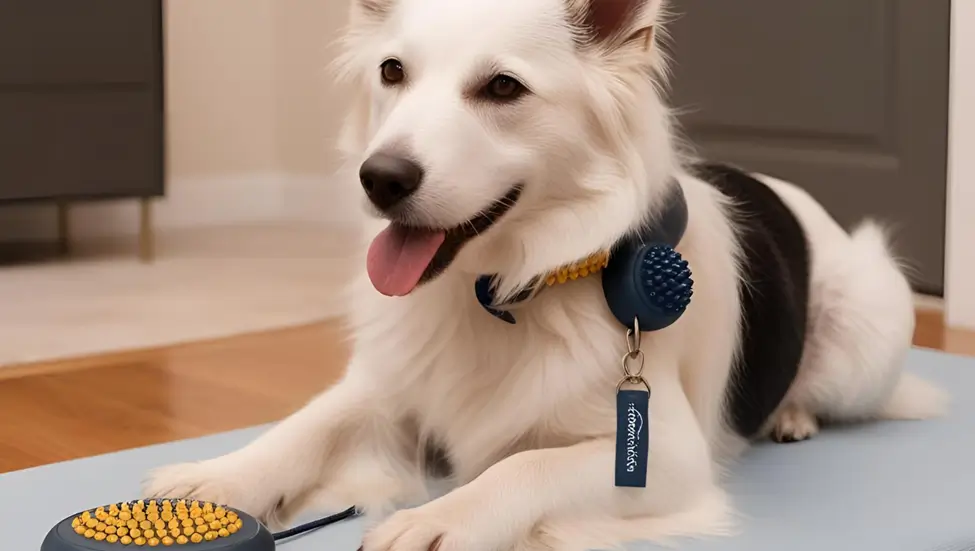
Imagine your dog spread out on a nice mat, peaceful music playing, incense burning in the corner, and you gently pressing on an area between their toes, causing them to sigh in contentment. No, this isn’t a spa commercial; it’s pet acupressure, which is a thing now.
Welcome to the realm of holistic paw-sibilities, where ancient healing meets wagging tails and purring fuzzballs.
Wait, acupressure for pets?
Yes, you read it correctly. Acupressure isn’t just for stressed-out humans like Linda who do yoga on Tuesdays; it’s an ancient method that’s gaining popularity in the realm of canine care.
► What is acupressure?
- An offshoot of Traditional Chinese Medicine (TCM)
- Uses finger pressure on specific energy points (meridians)
- Designed to stimulate healing, reduce pain, and balance energy (also called Qi)
And the best part ? It doesn’t involve needles. That’s acupuncture. Acupressure is more like a gentle pet massage with intent and magic paws.
The Numbers Don’t Lie: The Pet Wellness Shift
A 2024 Global Pet Wellness Survey showed that:
- 48% of pet owners have explored alternative therapies, including acupressure
- 68% noticed behavioral improvement in pets after consistent sessions
- 34% of dogs looked suspicious during their first session, but loved it by the third (okay, that one’s anecdotal)
Pet parents are more open than ever to complementary health treatments—and pets aren’t complaining.
► Why Your Pet Might Need Acupressure
You may think your furball is just lazy, but what if they’re actually dealing with muscle tension? Or anxiety? Or just had one too many zoomies?
Common Issues Acupressure Can Help With:
- Arthritis & Joint Pain – Especially in older dogs and cats
- Digestive Upsets – Too many snacks or that “mystery sandwich” they found on the sidewalk
- Anxiety & Stress – Loud noises, separation anxiety, trips to the vet
- Post-surgery Recovery – Aiding circulation and tissue repair
- Boosting Immunity – Because they deserve that wellness glow-up
►Spot the Signs: When Your Pet Needs That Zen Touch
Look out for:
- Limping or stiffness
- Excessive licking of certain body parts
- Nervous pacing
- Unexplained grumpiness (especially in cats, who are naturally dramatic)
- Sudden hatred for stairs
- If your pet is acting like a diva with a sore back—acupressure might help.
►The Paw-Points: Where to Press for Magic.
There’s no need to join at Hogwarts for this; simply study certain important pressure points.
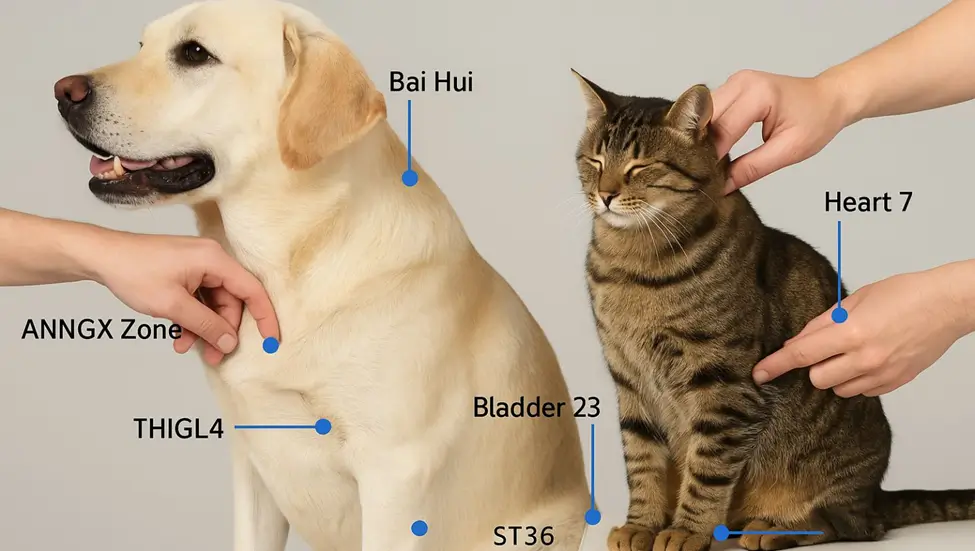
Common acupressure points for pets:
- Bai Hui (“Hundred Meetings”) : Found at the base of the tail. Excellent for relaxation and pain alleviation
- GV14: Between the shoulder blades. Improves immunity and vitality
- LI4 (Large Intestine 4): It is located on the paw between the thumb and index toe (yep, they too have those). Helps with pain alleviation and digestion difficulties
- ST36 (Stomach 36): Below the knee. Promotes digestion and vigour
Pro tip: Apply mild pressure for 30- 60 seconds. Pay attention to their body language—they’ll frequently lean in, yawn, or fall asleep in the middle of a session, like a furry Zen master.
►How to Start Acupressure at Home
Step-by-step guide:
- Set the mood – Quiet room, soft music, and absolutely no squirrels in view
- Start slow – Begin with light petting to calm them down
- Find your first point – Like Bai Hui (base of the tail)
- Apply gentle pressure – Use your thumb or two fingers
- Watch their reaction – No reaction? Move on. Tail wag? Jackpot!
- End on a happy note – Treats and belly rubs for all
Repeat 2–3 times a week. Or daily, if your dog demands it with the “sad eyes”
What the Experts Say
According to the American Holistic Veterinary Medical Association (AHVMA):
- Acupressure stimulates endorphin release, aka the “feel-good chemicals”
- Helps increase blood flow and lymphatic drainage
- Has shown positive results in canine rehabilitation programs
- Works well in conjunction with conventional treatments
- Think of it as a sidekick to your vet’s superpower—not a replacement.
► Real-Life Reactions from Very Honest Pets
- “I thought it was a belly rub… but my hips don’t hurt anymore. Conflicted, but impressed.” – Beagle, age 7
- “She touched my paw. I was about to file a complaint, but now I nap better.” – Cat, age 4, former skeptic
- “My human touched my back leg and I farted. We’re closer now.” – Bulldog, age 6
What NOT To Do
❌ Don’t use excessive force – this is not deep tissue massage
❌ Don’t try to treat serious issues without consulting a vet
❌ Don’t interrupt your pet’s nap to start a session—you’ll be judged
❌ Never use on open wounds, broken bones, or your goldfish (seriously)
► Final Thoughts: Press Here for Paw-sitive Vibes
Acupressure might sound fancy, but it’s really just a thoughtful way to connect with your pet and support their well-being. It’s safe, easy to learn, and your pets will thank you,probably with extra snuggles or weirdly long eye contact
Quick Acupressure Recap:
✔ Stimulates natural healing
✔ Reduces stress and anxiety
✔ Eases pain and improves circulation
✔ Safe for most pets when done gently
✔ Inexpensive and easy to do at home
So, next time your pet looks tense, try giving them the gift of touch—just don’t expect a tip.