
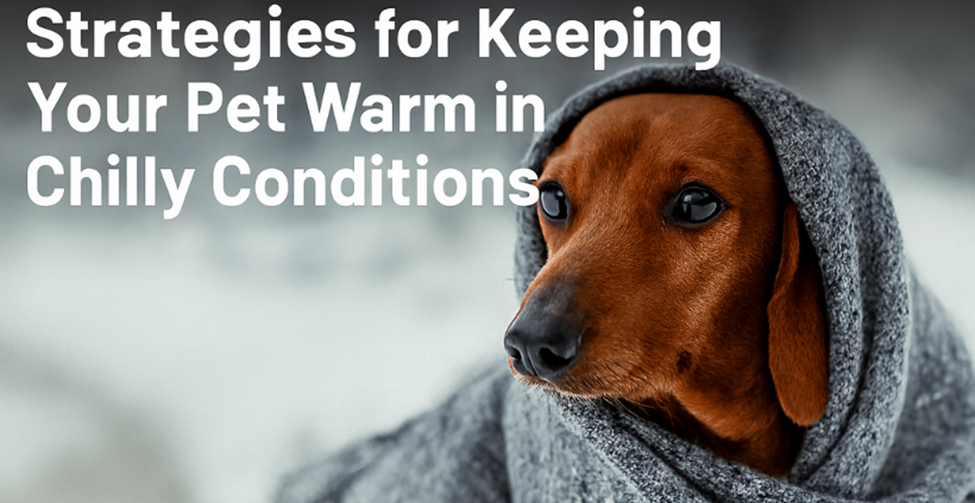
Top Strategies for Keeping Your Pet Warm in Chilly Conditions

INTRODUCTION
Winter is a wonderful time of year when the globe transforms into a glittering snow globe, and your pet looks at you as if to say, “You expect me to go out in that?”
You know that pets feel the cold the same way we do if you’ve ever seen your cat give you the cold shoulder—literally—for lowering the thermostat or your dog do the “one paw lift” dance on icy sidewalks. Some fur babies are simply born for winter, like Huskies, while others would prefer to be burrito-wrapped in blankets until spring.
The good news ? You don’t need a magical formula or a 24/7 job to make your pet comfortable. It’s all about a combination of common sense, creativity, and a little additional affection. So let’s get right into the top strategies for keeping your furry family warm and content when the weather outside is horrible by putting on your favorite pair of fuzzy socks.
1. Home is where the warmth is.
Your house should be their winter sanctuary, so let’s begin with the fundamentals.
Your pet is likely feeling cold if you are. Even animals with dense fur can feel uneasy when the temperature drops. Therefore, make sure your house is pet-friendly:
- Make a comfortable space: Consider adding a heated pet pad (they will adore you forever), extra blankets, and soft bedding.
- Keep draughts out: Move beds away from windows and doors where chilly air enters.
- Cover the cold: Tile and hardwood floors become icy quickly. A rug beneath your pet’s bed might make all the difference.
Pro tip: Cats are heat-seeking missiles. They’ll seek out the warmest place in the home, which is frequently the laundry basket, the computer, or that ray of sunshine that only lasts for five minutes. Embrace their cozy instincts rather than fighting it.
2. Wrap up, Buttercup!
If your pet has short hair or is small in size (looking at you, Chihuahuas and Greyhounds), they may need a little assistance to keep warm outside
Enter: pet fashion with a cause.
Sweaters and coats are not only attractive, but also useful. Their core is kept warm by a comfortable, soft coat that allows them to move freely.
In addition to being hilarious to see your dog attempt to walk in them for the first time, booties keep paws safe from ice, salt, and frostbite.
Rain gear: Wet fur = cold fur. A waterproof layer will keep them happy and dry on days when it rains or snows.
And no, they don’t dislike the attire; the side-eye is simply a component of the style.
3. Keep Those Valuable Paws Safe
Speaking about paws, they are the unsung heroes of winter survival. However, a short stroll can become a painful experience due to ice, snow, and road salt.
Your pet’s paws deserve some TLC, and here’s how to give it to them:
- After each walk, wipe their feet to get rid of salt and chemicals.
- Before going out, apply petroleum jelly or paw balm to form a protective barrier.
- To keep ice balls from forming, cut the hair in between the toes.
And if your pet gives you the impression that “We’re skipping the walk, right?” hey, indoor play is also important.
4. The Seasonal Diet
As your pet struggles to keep warm in the chilly weather, it burns more calories. They may require a small increase in their diet if they are physically active outside.
But don’t just load up on the kibble; instead, discuss healthy modifications with your veterinarian. You want them well-fed, not winter-fluffy.
Additionally, be sure that they constantly have access to clean water. Snow doesn’t count since it won’t provide enough hydration. If they spend time outside, a heated water bowl is a wonderful way to prevent it from freezing.
5. Indoor Workout: Enjoyable Without Risking Frostbite
Some animals thrive on snow days, while others behave as though going outside is a personal betrayal. Bring the excitement inside if your furry pal belongs to the latter group.
- Fetch in the hallway.
- Using pillows and boxes, create a little obstacle course.
- To keep their mind occupied, try treat-dispensing games or puzzle toys.
Laser pointers, feather wands, and even cardboard boxes may transform a dreary day into a play day for cats since they are masters of “cozy chaos”.
6. For Outdoor Animals: Go the Extra Mile
Regardless of how much time your pet spends outside, adequate shelter is a must.
Their area should be insulated: The doghouse should be elevated off the ground and lined with straw or blankets for insulation (avoid towels, as they retain moisture).
Include a flap door: It aids in trapping heat and preventing wind.
Regularly inspect the water because it may freeze quickly, even in moderate temperatures.
Remember: It’s too cold for them if it’s too cold for you. Bring them inside during severe weather; they will return the favor with cuddles.
7. Small additions that make a huge difference
For senior animals with arthritis, a warm pet pad or blanket may be revolutionary.
- Maintain a consistent grooming routine, since clean fur holds heat more effectively than matted fur.
- Plan winter vet checkups as the chilly weather can exacerbate cardiac problems or joint pain.
- And, naturally, never leave dogs unattended in a chilly vehicle. It’s really a freezer on wheels.
Concluding Point: Warmth Is Love Made Visible
Ultimately, caring for your pet’s warmth is not merely about their comfort; it’s about understanding their quirks, seeing their shivering, and saying ,”I’ve got you.”
Even though winter can be accompanied by frosty mornings and cold nights, it also provides countless opportunities for cuddling, unwinding in the afternoon, and perhaps even donning matching sweaters.
Because, let’s face it, there’s nothing more heartwarming than a warm, contented pet napping at your side.