
Essential Health Checklists for Cats at Every Age: Ensuring Your Feline Friend Thrives


INTRODUCTION
If cats had their way, their annual health check would involve a spa day, an all-you-can-eat tuna buffet, and precisely zero needle pokes. Unfortunately for them—and fortunately for their longevity—we mere humans are responsible for making sure our whiskered companions are in tip-top shape from kittenhood to their retirement years in the sunniest window spot.
Let’s dive into a quirky, age-by-age guide to cat health, because even if your cat acts like it’s above it all, their health is your responsibility. Also, cats don\’t have thumbs—makes filling out insurance forms tricky.
Kittenhood (0–12 Months): The Chaos Gremlin Phase
Kittens are like furry toddlers on espresso. They’re cute, chaotic, and constantly plotting to knock over your plants.
Health Checklist:
Vaccinations: Protect against FVRCP (Feline Viral Rhinotracheitis, Calicivirus, and Panleukopenia), rabies, and FeLV (if at risk).
Spaying/Neutering: Around 4-6 months to prevent the call of the wild (and kitten surprises)
Parasite Control: Fleas, ticks, and worms—oh my! Regular deworming and flea treatments are vital.
Nutritional Needs: High-calorie kitten food; they’re growing faster than your student loan interest.
Micro-chipping: Because one zoomie-fueled escape attempt and you’ll wish you did.
Survey Snippet: According to a 2024 American Veterinary Medical Association (AVMA) report, 87% of kitten owners who scheduled a wellness check within the first 8 weeks reported fewer health issues later in life.
Young Adult Cats (1–6 Years): The Explorer Stage
These are your cat’s “adventure years,” where they leap, climb, and judge you silently from the bookshelf.
Health Checklist:
Annual Wellness Exams: Even if your cat is acting perfectly fine (read: snubbing you), yearly checkups are a must.
Weight Monitoring: Avoid the dreaded “chonky” label—obesity is a top concern.
Dental Care: Yes, you need to brush their teeth. No, you can’t just pretend they’re self-cleaning.
Behavioral Checks: Monitor for anxiety, aggression, or the sudden compulsion to attack your toes at 3 AM.
Fun Fact: A 2023 PetWellness poll found that 62% of cat owners believe their cat fakes sleep to avoid vet visits. No scientific basis, but it sure feels true.
Middle-Aged Cats (7–10 Years): The Uncle Stage of Slight Judginess
They’ve grown wiser, mellowed out, and maybe a little more fluffy. It’s time to monitor any developments.
Health Checklist:
Veterinary Checkups Every Two Years: examinations twice a year to identify chronic diseases early.
Bloodwork Panels: Early identification of diabetes, thyroid problems, and kidney illness.
Arthritis Screening: Joint problems could be developing even if kids continue to jump atop the refrigerator.
Dietary Changes: Switch to adult or mature formulations with more joint support and calorie control.
According to the Purina 2023 Feline Aging Study, 43% of middle-aged cats had osteoarthritis early on, with many showing no symptoms at all.
Senior Cats: The Experts in Napping (11–14 Years Old)
They are entitled to eighteen hours of naps every day. Senior cats, however, require extra care beneath their cuddly exterior.
Health Checklist:
Senior Blood Panels: Continually measure thyroid, liver, kidney, and glucose levels.
Dental Exams: Unfortunately, about 70% of cats older than 11 suffer from dental disease.
Vision and Hearing Evaluations: Is your feline a little hard of hearing or is it ignoring you?
Litter Box Behavior: Keep an eye out for changes, as missing the box may indicate discomfort or bewilderment.
Environment Modifications: Lower perches, heated mattresses, and ramps can all assist relieve aching joints.
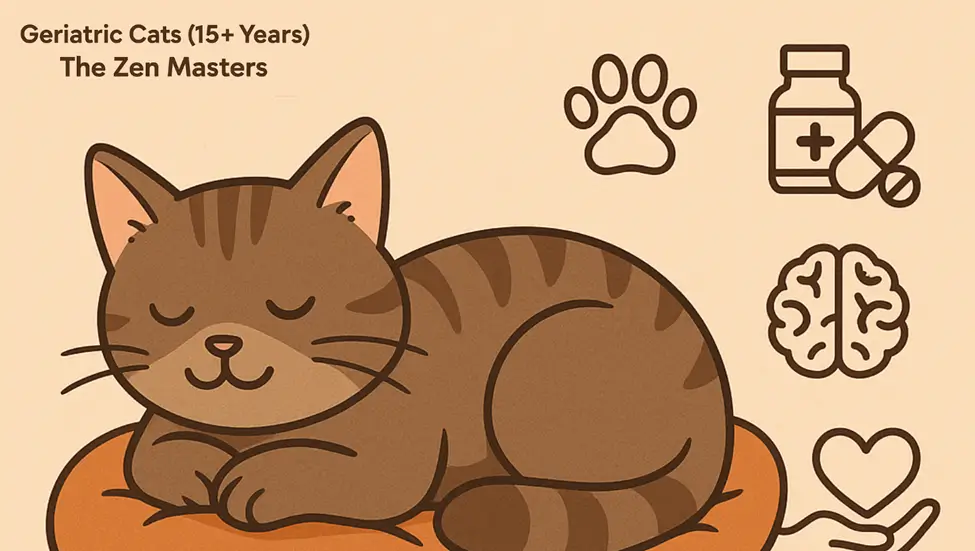
Geriatric Cats (15+ Years): The Zen Masters
At this stage, every purr is a poem, and every head-butt is a blessing. They deserve comfort, monitoring, and gourmet treatment (but not too many treats).
Health Checklist:
Quarterly Vet Checks: Regular monitoring can help detect subtle shifts in health.
Pain Management: Arthritis, dental issues, and even tumors are common—your vet can help with meds or supplements.
Cognitive Health: Watch for signs of feline cognitive dysfunction—confusion, excessive meowing, or disorientation.
Hydration Focus: Older cats often battle kidney issues—consider wet food, fountains, or broth boosts.
Comfort Care: More heat, more cuddles, and less stress. They’ve earned it.
Heart warmer: In a recent Cat Aging Project report, owners of cats over 17 years overwhelmingly reported that their senior kitties were “more affectionate than ever.”
Bonus: Universal Cat Health Hacks
No matter your cat’s age, these are the holy grails of feline wellness:
Proper Nutrition: Age-specific, vet-approved, and occasionally graced with a sardine treat.
Routine Parasite Prevention: Even indoor cats can get fleas (yes, it’s unfair).
Mental Stimulation: Toys, cat trees, and your laptop keyboard all count.
Love & Patience: You’re their person. And sometimes, their heated pillow
Final Thoughts: Your Cat, Your Furry Responsibility
Cats might act like aloof aristocrats, but they rely on you to keep them healthy through every stage of life. With a good vet, a bit of planning, and a willingness to be judged by your pet regularly, you can ensure they thrive—nap after glorious nap.
Because behind every healthy cat… is a human googling “how to brush a cat’s teeth without losing a finger.”