
Common Herbal Remedies for Pets: What Every Pet Owner Should Know


INTRODUCTION
Let’s be honest: pets are family. And like that one uncle who swears by garlic for everything from colds to warding off ghosts, many pet owners are turning to herbal remedies as a natural way to keep their furry friends healthy. But are they effective? Are they safe? Let’s sniff out the truth.
Why Herbal Remedies for Pets?
Modern medicine is great, but herbs have been the go-to for centuries—especially for our ancestors who didn’t have a 24/7 emergency vet down the street. According to a 2024 survey by the National Pet Health Institute, over 47% of pet owners have tried herbal or natural remedies for their pets.
Why the shift?
- Concerns about long-term use of pharmaceuticals
- Interest in organic and holistic pet care
- TikTok pet influencers recommending dandelion root (seriously)
Know Before You Grow: A Few Caveats
Before you turn your backyard into a pet-friendly apothecary:
- Not all herbs are safe. Just because it’s natural doesn’t mean it’s good for your dog or cat (or goldfish).
- Dosage matters. A little chamomile = calm. A lot of chamomile = accidental nap for 12 hours.
- Consult a vet. Preferably one who doesn’t roll their eyes when you say “I read on Reddit…”
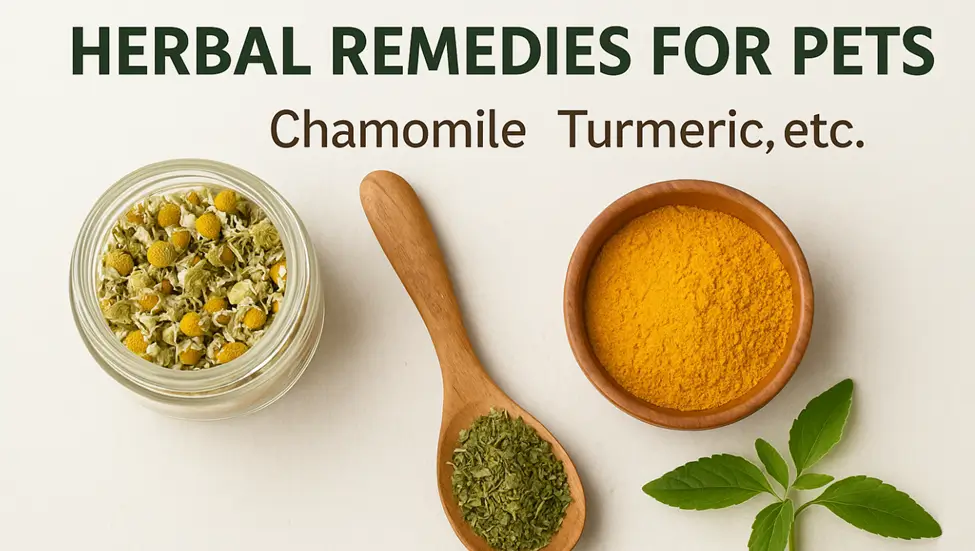
Top Herbal Remedies That Actually Help
Let’s break it down by condition. Here’s what herbal heroes might help with your pet’s most common issues.
Anxiety & Stress
Your pet’s version of anxiety might be a thunderstorm or you leaving the room for five minutes.
Chamomile
- Calming herb often used in teas
- Works as a mild sedative for dogs and cats
Bonus: smells like sleepy-time tea
Valerian Root
- Stronger calming agent
- Good for high-strung pets (looking at you, Chihuahuas)
- Can make some cats hyper instead of sleepy—because why not?
Survey Says- A 2023 Pet Calming Remedies Report showed that 65% of pet owners saw noticeable anxiety reduction using natural supplements that included chamomile or valerian.
Joint Pain and Arthritis
That “old dog stretch” may not be just a stretch; it might be arthritis.
Turmeric
- Curcumin is an anti-inflammatory.
- Frequently used to pet-safe “golden paste”
Pro tip: combine with coconut oil and black pepper to absorb.
Boswellia (also known as Frankincense)
- Not just for wise folks anymore.
- Reduces inflammation and improves pain control.
Digestive drama
Whether it’s “oops, I ate something in the trash” or simply a sensitive stomach:
Ginger
- Helps with nausea and bloating.
- Especially good for travel.
Slippery Elm Bark
- Soothes inflamed digestive tracts.
- Consider it as Pepto-Bismol’s leafy relative.
Skin & Coat Health
Because flaky skin and itchiness aren\’t just a human winter problem.
Aloe Vera
- Applied topically (DO NOT let pets eat it!)
- Soothes burns, bites, and rashes
Nettle
- Natural antihistamine
- Helps with seasonal allergies and itchy skin
Herbs to Avoid Like a Dog Avoids Baths
Let’s talk danger zone. These herbs are common—but not for pets.
- Garlic and Onion
Even in small amounts, they can damage red blood cells (especially in cats)
- Pennyroyal
Used in flea treatments, but super toxic if ingested
- Tea Tree Oil
Great for humans, but even a few drops can cause tremors or liver issues in pets
Pro tip: If it sounds like something your great-aunt rubs on her feet, double-check with a vet before using it on your pet.
Herbal Pet Products on the Rise
Thanks to the booming pet wellness market (worth $44.7 billion in 2024, according to Global Pet Industry Trends), brands are going all in on herbal.
Popular product types:
- Herbal chews and biscuits
- Tinctures and liquid drops
- Balms and sprays
- Herbal flea collars (surprisingly effective… and minty fresh)
Bonus: The rise of “pup-scriptions” means you can now get monthly deliveries of calming chews, gut-soothing powders, and anti-itch sprays—all herbal.
Real Talk: What Do Pets Think?
Here’s what our imaginary panel of pets had to say:
“The turmeric paste tastes weird, but I can finally chase squirrels again.” – Old Lab, 10
“Valerian root made me feel like I could climb the ceiling. 10/10.” – Hyper Cat, 3
“I don’t know what ‘slippery elm’ is, but I haven’t had the runs in weeks. Thanks, hooman!” – Honest Pug, 6
Final Thoughts: A Balanced Bowl
Herbal remedies aren’t magic, but they can seriously help when used correctly. Combine them with good nutrition, exercise, vet checkups, and lots of belly rubs for a holistic pet-care plan.
Quick Checklist for Pet Parents:
✔ Research the herb
✔ Check dosage (based on pet size)
✔ Talk to your vet
✔ Monitor reactions
✔Never substitute herbs for emergency care
Because your pet deserves the best—whether that’s modern medicine or a calming tea party for two.
La popularidad de pin up casino descargar sigue creciendo entre los jugadores mexicanos que buscan entretenimiento seguro y confiable en linea.
Las promociones y bonificaciones especiales en plataformas mexicanas hacen que jugar en linea sea aun mas atractivo.
Your comment is awaiting moderation.