
Aromatherapy for Pets: The Ultimate Guide to Choosing the Right Essential Oils for Your Beloved Companions

INTRODUCTION
Let’s face it—pets have stress too. Dogs worry about whether you’ll come back when you leave the house for 10 minutes. Cats spend hours contemplating the mysteries of the universe (or just the best way to knock something off a shelf). So, how can we help our beloved fur babies find their inner Zen?
Enter aromatherapy!
Essential oils are no longer limited to yoga mothers and upscale spas. With promises of relaxation, improved sleep, and even flea control, they are making their way into the pet industry. Let’s examine what works, what is safe, and what can make your pet run away before you start diffusing lavender like a wellness expert.
Why Use Aromatherapy for Your Pet?
The practice of employing plant-derived essential oils to enhance mental, emotional, and physical health is known as aromatherapy. And you know what? It’s not only for people!
Lavender and chamomile are the most commonly used essential oils for pets, with 62% of pet owners using them, according to a 2024 Pet Wellness Survey. Why?
Natural alternative to medicines
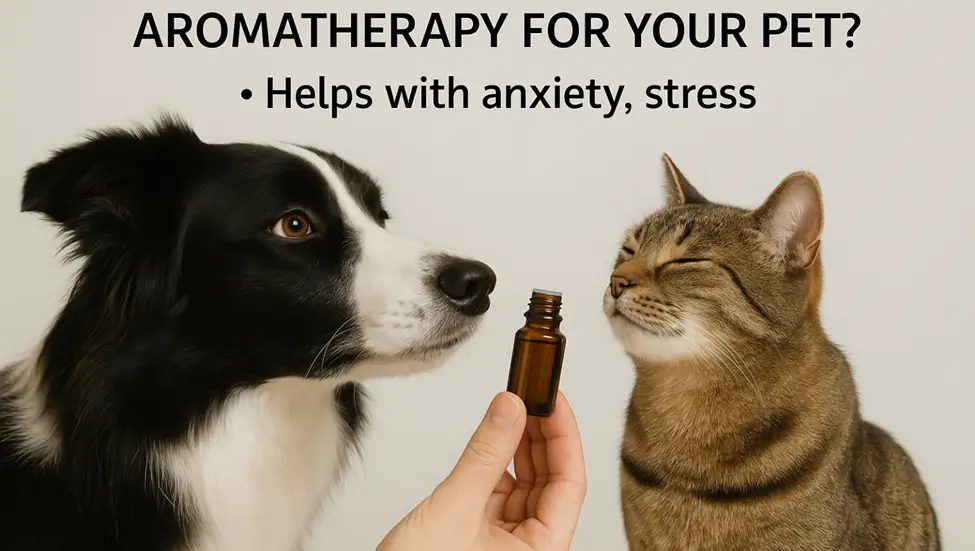
- Helps with anxiety, stress, and hyperactivity
- Can soothe itchy skin and repel fleas
- Some oils even boost the immune system
But here’s the catch—not all essential oils are safe for pets. Let’s break it down.
Essential Oils to Avoid Like Your Dog Avoids Bath Time
Not all essential oils are pet-friendly. In fact, some can be downright dangerous. Here are a few you should NEVER use around your furry friends:
❌ Toxic Essential Oils for Pets
Tea Tree Oil – Popular in human skincare, but toxic to pets. Even a few drops can cause weakness, tremors, and vomiting.
Cinnamon & Clove – Smells amazing but can cause liver toxicity in cats and dogs.
Peppermint – Great for fresh breath, terrible for pets. Can lead to difficulty breathing and digestive upset
Eucalyptus – You might love the spa vibes, but this oil can cause drooling, lethargy, and even seizures in pets.
Citrus Oils (Lemon, Orange, Bergamot, etc.) – While refreshing for humans, these oils can irritate a pet’s skin and liver.
Pro Tip: Cats are more sensitive than dogs since their livers cannot metabolize some substances. When in doubt, consult a veterinarian before using any essential oil around your pet.
Essential oils that pets love and benefit from!
Now that we’ve scared you a little, let’s talk about the GOOD oils, which are safe and useful to your dogs when used correctly.
Anxiety and Stress Relief
Because fireworks, vacuum cleaners, and the postman are terrifying
- Lavender is the holy grail of calming oils! Helps with anxiety, stress, and insomnia.
- Chamomile – Calms anxious pets and encourages relaxation (especially beneficial for itchy skin).
- Frankincense is not just for Biblical times! Promotes immunological health and emotional equilibrium.
Pain Relief & Joint Health
For senior pets who need a little extra TLC.
- Ginger – Anti-inflammatory properties that help with arthritis and digestion.
- Turmeric Oil – Reduces joint pain and inflammation.
- Marjoram – Natural muscle relaxant for stiff joints.
Flea & Tick Prevention
Because nobody likes uninvited guests
- Cedarwood – Repels fleas and ticks naturally.
- Rosemary – Keeps bugs away while promoting a shiny coat.
- Lemongrass – Great flea repellent, but use in low dilution to avoid irritation.
Skin & Coat Health
For that extra silky, non-itchy fur
- Aloe Vera Essential Oil – Soothes skin irritation and minor wounds.
- Coconut Oil (infused with lavender) – Hydrates dry skin and helps with allergies.
Safe Ways to Use Essential Oils for Pets
Diffusion (the right way) – Use a pet-friendly diffuser and let them leave the room if they want. No forced Zen sessions!
Diluted Sprays – Mix a few drops with water and mist their bedding for relaxation.
Topical Application – Only with proper dilution (1 drop per tablespoon of carrier oil).Apply on the back, never the face
Infuse a cloth collar with a tiny amount of diluted essential oil for a calming effect.
Unsafe Uses
- Never apply undiluted oils directly on your pet.
- No forceful inhalation (holding a bottle under their nose is a no-go).
- Keep oils away from cats’ fur—they groom themselves and could ingest harmful compounds.
.
Real Pet Owners, Real Results
A 2023 survey by the Global Pet Aromatherapy Association found that:
- 78% of pet owners saw a reduction in anxiety-related behaviors (barking, whining, pacing) when using lavender oil properly.
- 55% of dog owners noticed an improvement in sleep patterns with chamomile-infused sprays.
- 63% of owners reported fewer flea infestations after incorporating cedarwood into their pet’s routine.
And the best part? Most pets actually enjoy the scents—when used correctly
What Do Pets Think About Aromatherapy?
- “Lavender helps me chill, but honestly, I just want more belly rubs.” – Golden Retriever, 5
- “I knocked the diffuser off the table. Now my human watches me sleep in fear.” – Cat, 3
- “Cedarwood keeps fleas away. Finally, I can scratch less and nap more.” – Happy Dog, 7
Final Thoughts: A Balanced Approach
Aromatherapy for pets isn’t just a trend—it’s a science-backed wellness tool that can help with anxiety, pain, fleas, and more. But as with anything in pet care, balance is key.
Quick Checklist for Pet Parents
✔ Choose pet-safe essential oils
✔ Dilute, dilute, dilute!
✔Always let pets leave the room if diffusing
✔ Monitor for reactions like sneezing, drooling, or lethargy
✔ Consult a vet before introducing new oils
Your pet’s happiness and health come first—so use essential oils wisely and let the relaxation begin!